How Africa is grouped by region
Africa is a single continent, but its 54 sovereign states are usually clustered into five sub-regions for analysis. The grouping you see here — North, West, East, Central, and Southern — is the one most commonly used by the African Union, the United Nations Statistics Division, and the World Bank for African coverage. The exact membership of each region varies a little between organisations: some place Sudan in North Africa (we do), others count it in East Africa; Mauritania and Western Sahara sit at the boundary between North and West and are sometimes assigned differently. We follow the most common convention and footnote any edge cases on the country profile itself.
Why group countries at all? Because most of the meaningful comparisons in African data — labour markets, regional trade, language and currency overlap, climate zone, exposure to specific shocks — make more sense within a region than across the continent as a whole. The five-way split is also how Africa\'s big regional economic communities organise themselves: ECOWAS in the west, EAC and COMESA in the east, SADC in the south, ECCAS in the centre, and a less institutionalised but heavily integrated Maghreb / Mediterranean cluster in the north. For the institutional side — the African Union and the eight Regional Economic Communities — see the AU and the RECs.
The cards below summarise each region\'s headline numbers — country count, population, combined GDP and area. Click any card to open the regional page, where every constituent country is listed in a sortable grid with population and GDP. For every country, the dedicated profile page adds capital, languages, currency, life expectancy, literacy, urbanisation, and growth rate; see the glossary for what each indicator means. For all five regions on every indicator side by side, see the regional comparison.
Regional Comparison
Africa's Regional Divisions
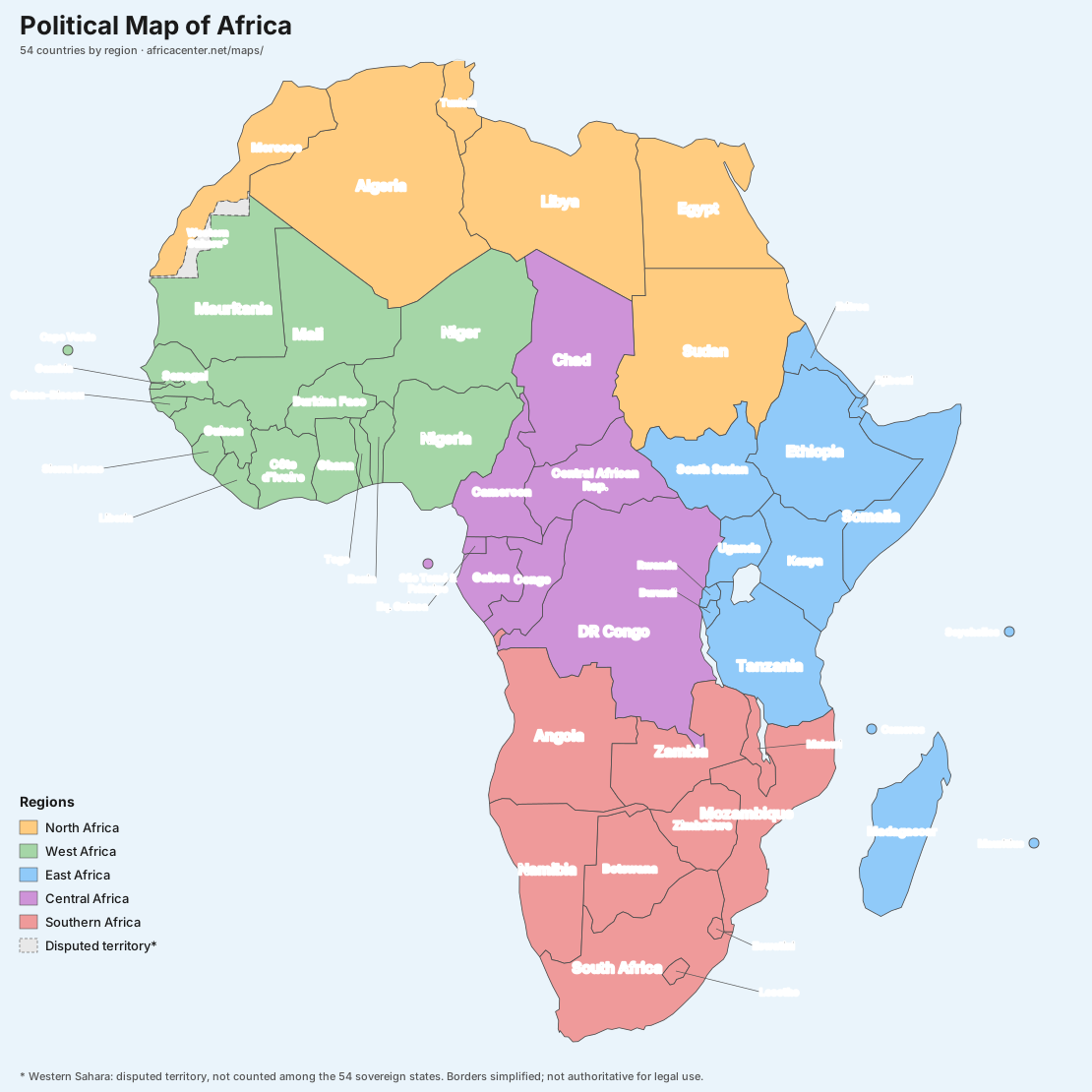
Open the interactive map of Africa to explore each country.
Continue Reading
Frequently Asked Questions
How many regions are there in Africa?
Africa is most commonly divided into five regions: North Africa, West Africa, East Africa, Central Africa and Southern Africa. This is the grouping used by the United Nations and the African Union, and the one used across this site.
What are the five regions of Africa?
The five regions are North Africa (6 countries, plus the disputed territory of Western Sahara), West Africa (16 countries), East Africa (14 countries), Central Africa (8 countries) and Southern Africa (10 countries), together covering all 54 African nations. Browse each one: North, West, East, Central and Southern Africa.
Is Africa a region or a continent?
Africa is a continent — the world's second largest — not a region. Within it, geographers and international organisations identify five sub-regions to group its 54 countries for comparison and analysis.
Which countries are in Central Africa?
Central Africa comprises eight countries: Cameroon, the Central African Republic, Chad, the Republic of Congo, the Democratic Republic of the Congo, Equatorial Guinea, Gabon and São Tomé and Príncipe. Angola is sometimes counted as Central African too; this site groups it with Southern Africa. See the Central Africa overview.
Which region of Africa has the most countries?
West Africa has the most countries of any African region, with 16 nations including Nigeria, Ghana, Senegal and Côte d'Ivoire.